.jpg)
.jpg)
.jpg)
Get evidence-based insights on hormones, fertility, and women's health delivered weekly to your inbox.
.svg)
.svg)


©2026 Dr. Sasha Hakman, MD. All Rights Reserved
Male reproductive health plays a vital role in natural conception, and issues with sperm quality or quantity account for nearly half of all infertility cases. The good news is that men continually produce new sperm, and many fertility concerns can improve with lifestyle changes, treatment, or medical support.
Below is an overview of the most common causes, testing methods, and treatment options for male infertility.
.png)
.png)
Natural conception requires healthy sperm that can swim up the female reproductive tract to reach the Fallopian tubes to then fertilize an egg to take place. If sperm quality and/or quantity are suboptimal, this makes conception more difficult. Male infertility accounts for almost half of all infertility cases. While egg and sperm quality are incredibly important to reproductive success, unlike women who are born with all their eggs, men continuously make new sperm starting at the time of puberty. The life cycle of sperm is about 74 days until it is ready for ejaculation.
Luckily for men, sperm quality can significantly improve with lifestyle changes and medical treatment since it takes approximately 3 months to make new sperm! That being said male fertility still declines with age. At age 40-45, sperm quality begins to decline and there is a higher associated risk of genetic and neuropsychiatric disorders (though the absolute risk of this is still low).
Male infertility can be caused by various factors, many of which can be diagnosed and treated with the help of modern medicine. Common causes include:
This is the presence of enlarged veins in the scrotum, which can raise the temperature around the testes, affecting sperm production and quality.
Low levels of testosterone or other hormonal issues (like those involving the pituitary gland) can impair sperm production.
Genetic disorders like Klinefelter’s syndrome (47,XXY), Y chromosome microdeletions (AZF genes), or cystic fibrosis can lead to male infertility.
This is the presence of enlarged veins in the scrotum, which can raise the temperature around the testes, affecting sperm production and quality.
Conditions like retrograde ejaculation (where sperm enters the bladder instead of being expelled) can prevent sperm from reaching the egg.
Obesity, smoking, excessive alcohol consumption, drug use, extreme stress, and exposure to environmental toxins can negatively affect sperm quality.
While men can remain fertile longer than women, sperm quality tends to decline after the age of 40, increasing the risk of infertility.
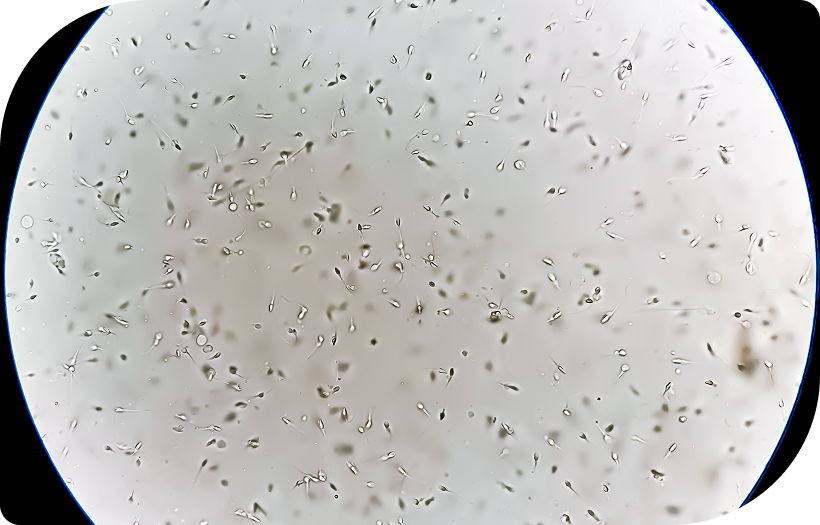
A thorough evaluation of male fertility typically starts with a semen analysis, which measures the quantity and quality of sperm.
A semen analysis is ideally obtained after 2-7 days of abstinence and immediately evaluated after ejaculation. The following parameters in a sperm sample are assessed:
This can help determine whether there is hypogonadism (low testosterone affecting sperm production) either due to testicular failure or endocrine disorders (hypogonadotropic hypogonadism). Blood tests measure levels of testosterone and other hormones, such as follicle-stimulating hormone (FSH) and luteinizing hormone (LH).
Genetic tests may be recommended if low sperm concentration is identified. These tests can detect conditions like abnormal chromosome number (like in the case of Klinefelter’s syndrome), Y chromosome microdeletions or cystic fibrosis, which may cause infertility.
Scrotal ultrasound can detect structural abnormalities such as varicoceles
.png)
Treatment for male infertility depends on the underlying cause. Many men can improve their fertility with lifestyle changes, medications, or medical procedures. Here are the most common treatments available:
%201.svg)
For many men, lifestyle modifications can significantly improve fertility. These changes may include:
Medications can be used to treat endocrine abnormalities or infections that affect sperm production. Some common medications include:
Surgery may be required to correct certain physical conditions that cause infertility, such as:
If natural conception isn’t possible, assisted reproductive technologies can help:
Intrauterine Insemination (IUI): Sperm is collected, washed, and placed directly into the uterus using a catheter, at the time of ovulation.
In Vitro Fertilization (IVF): Eggs are retrieved from the female partner and fertilized with the male’s sperm in the lab. The resulting embryo(s) are then transferred into the uterus.
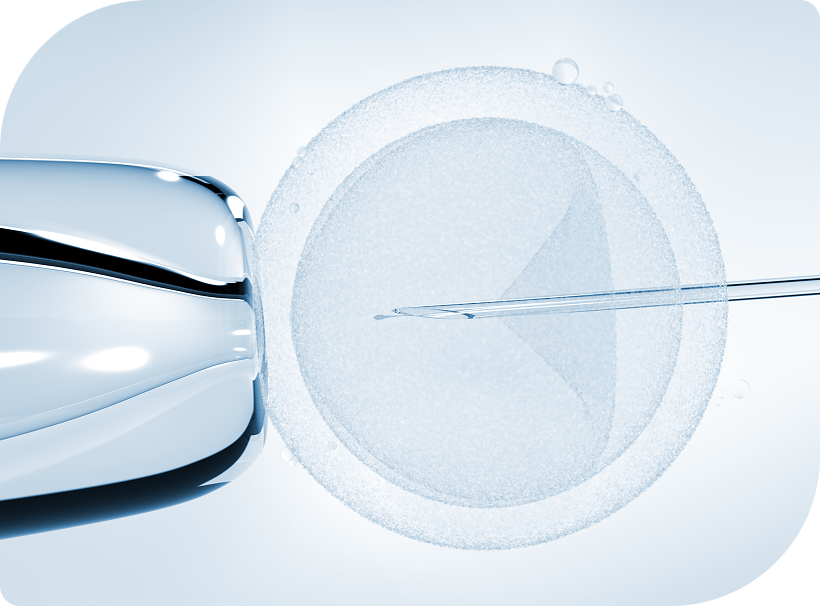
Intracytoplasmic Sperm Injection (ICSI): This is a commonly used technique in IVF to increase fertilization, particularly when there is male factor infertility, or using previously frozen and thawed eggs (though ICSI is more routinely utilized now in most IVF labs). Here, a single sperm is injected directly into the egg.

In addition to medical treatments, lifestyle changes and supplementation can help improve male fertility and maximize treatment success (though it is important to note, they usually don’t replace treatment!). These include:
Antioxidant Supplements: Vitamins C and E, coenzyme Q10, and zinc can help improve sperm quality by reducing oxidative stress.
Exercise: A combination of resistance training with cardio for at least 150 minutes per week can improve testosterone levels as well as other metabolic parameters to ameliorate sperm quality. Excessive exercise should be avoided, as it can sometimes be detrimental to reproduction.
Diet: A balanced diet rich in fruits, vegetables, and whole grains supports reproductive health. Foods high in omega-3 fatty acids, like fish and flaxseed, can also promote better sperm health.
Want to learn more? Contact us at 310 855-3688 or email hello@sashahakmanmd.com or fill out a form today to schedule a consultation!
Check out my blog to help guide you throughout your fertility journey!
.png)
Connect with one of our experienced fertility specialists to explore your options. We’re here to guide and support you every step of the way.
Book an AppointmentGet evidence-based insights on hormones, fertility, and women's health delivered weekly to your inbox.
©2026 Dr. Sasha Hakman, MD. All Rights Reserved