Get evidence-based insights on hormones, fertility, and women's health delivered weekly to your inbox.
.svg)
.svg)


©2026 Dr. Sasha Hakman, MD. All Rights Reserved
In the world of IVF, as you start to learn more about the intricacies of what happens in the lab, it can become overwhelming—especially when you’re faced with making important decisions while trying to weigh cost versus benefit. There’s no doubt that cost plays a role for many, especially since some clinics charge “à la carte,” while others offer packaged pricing that includes interventions like ICSI, assisted hatching, embryo biopsy, and PGT-A.
But when you’re doing IVF and retrieving eggs from the ovaries, a common question arises: Which method of fertilization is better? Should we place the eggs in a dish with sperm and hope for “survival of the fittest,” or should we select the best-looking sperm and inject one into each mature egg?
To answer that, I first have to explain what actually happens in the lab during conventional IVF and ICSI (which stands for intracytoplasmic sperm injection).
When eggs are retrieved, they’re still surrounded by a layer of cells called cumulus cells, which are critical for egg maturation and hormone signaling. In conventional IVF, we leave this cumulus-oocyte complex intact. Washed sperm is added to a dish containing the eggs, and the dish is placed in an incubator designed to mimic the environment of the fallopian tube.
We check the next morning to see which eggs fertilized normally.

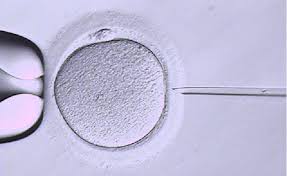
ICSI is a more hands-on approach. First, embryologists remove the cumulus cells from each egg, called stripping, to assess egg maturity. Only mature eggs (called MII) are eligible for ICSI.
Under high-powered microscopy, a single healthy-looking, motile sperm is selected using a pipette. The sperm is immobilized (usually by breaking the tail), then injected directly into the cytoplasm of the egg using a microneedle. Like conventional IVF, the eggs are incubated overnight and checked the next day for fertilization.
ICSI is an incredibly precise and skill-dependent procedure!
Let’s go over the actual indications for ICSI, according to the American Society for Reproductive Medicine (ASRM), which has published evidence-based recommendations in their Practice Committee Guidelines¹:
ICSI is recommended for:
ICSI is not recommended routinely for:
While ICSI may sound more precise, more intervention doesn’t always mean better outcomes.
A large 2018 Cochrane review (Chen et al.) and additional analyses cited by ASRM have shown that:
While generally safe, ICSI:
Despite ASRM recommendations, what’s happening in most IVF clinics in the U.S. looks very different. The use of ICSI has increased dramatically—from 36.4% in 1996 to 76.2% in 2012, and now up to 82% of IVF cycles since 2020⁴.
This trend reflects a growing tendency to use ICSI beyond its original indications. A big concern for many clinics is the risk of total fertilization failure (TFF), which is defined as a fertilization rate below 30%. While the average fertilization rate in IVF is about 70%, TFF still occurs in 5–15% of cycles⁵. And while this is a clear reason to use ICSI in subsequent cycles, most patients—and clinics—aim to get it right the first time, especially given the financial, physical, and emotional cost of repeating treatment.
The answer, like many things in medicine, is: it depends.
This is a decision worth discussing with your fertility specialist, based on your unique medical history and fertility work-up. Not everyone needs ICSI—and not everyone should skip it either. The key is informed decision-making.
1. Practice Committee of the American Society for Reproductive Medicine. Intracytoplasmic sperm injection (ICSI) for non-male factor infertility: an ASRM Committee Opinion. Fertil Steril. 2020;114(2):239-245.
2. Chen D, et al. ICSI versus conventional IVF in patients without male factor infertility: A Cochrane Review. Cochrane Database Syst Rev. 2018.
3. Esteves SC et al. ICSI use in non-male factor infertility: where do we draw the line? Reprod Biol Endocrinol. 2020.
4. A SART NATIONAL REVIEW OF INDIVIDUAL CLINIC ICSI USE TRENDS (2014-2020). Andrew, Claffey et al. Fertility and Sterility, Volume 120, Issue 1, e15
5. Development and validation of a clinical prediction model of fertilization failure during routine IVF cycles. Liu Xingnan and Zhang Na. Front. Endocrinol., 18 January 2024. Sec. Reproduction. Volume 14 – 2023.
.png)
Connect with one of our experienced fertility specialists to explore your options. We’re here to guide and support you every step of the way.
Book an AppointmentGet evidence-based insights on hormones, fertility, and women's health delivered weekly to your inbox.
©2026 Dr. Sasha Hakman, MD. All Rights Reserved